
Imagine you are walking onto a stage to give a speech. Your palms get all sweaty and clammy , your heart pounding against your ribs , your body curling in fear and when you step on stage you see all these eyeballs laser-focused on you. Confident is the last thing you feel in your body.
Now , imagine opening your posture , lifting your chin and scanning the room with an unbothered and natural gaze. Your body language is calm and projects confidence and authority.
In this post , we are going to talk about these exact subconscious signals that make you look confident even if you’re nervous , so you can command attention and an audience can take you seriously , even if you can feel your heartbeat outside of your shirt.
Posture
When anxiety physically manifests , our bodies may naturally curl inwards to protect our internal organs. This tendency to have closed posture and curl inward when feeling nervous comes from our evolution.
How do you we know that closed posture / curling inwards is unconfident?
Shortly due to behavioural pyschology , biology and social signaling. Universally , confidence is signalled by expansion whilst anxiety is signalled by minimisation.
Confident posture
Confident posture are open chest , uncrossed arms, legs , exposed neck , relaxed shoulders , head held up high and eye maintained at eye level). These signs show the world – “I am in control” and ” I’ve got this”.
Scared posture
Nervous posture is crossed limbs , poor , curled posture , hunched shoulders and eyes looking down / looking for exits). These signs signal “I’m scared” , “I don’t know what I’m doing” and “”Please don’t judge me”.
Eyes
When we are nervous , we tend to dart our eyes around the room or look at the floor. Nervous people do this to avoid percieved social threats. According to social pyschology , sustained eye contact is associated to percieved trustworthiness and confidence. Looking at someone in their eyes releases a chemical called oxytocin in the listener which creates a instant bond.
The fix? If you’re talking to one person , look at one eye. This is more easier and less creepier to do than staring at someone in their eyes. If talking to a big group of people – don’t look at the entire crowd at once. Looking at the entire crowd at once may be overwhelming and anxiety-inducing. Instead pick one person in each section of the crowd , look at them in the eye when saying a single sentence and then look at somebody else in the next section.
Voice
You may notice your voice goes more high-pitched when you’re anxious. A high-pitched voice tells the audience that the speaker is distressed , unprepared or has no control. According to a study done by the Journal of Nonverbal Behaviour discovered that people who with a lower pitched voice were percieved as more confident , competent and leadership-like. A deeper , low pitched voice signals confidence and calmness.
Hands
Hand placement and movement matters. Fidgety hands , hidden hands , hands in pockets are ways our bodies try to shield ourselves from the audience.
The Science: According to body language research , exposed hand palms are a universal sign of lack of threat and honesty. When an audience or individual sees your exposed palms , their brains subconsciously consider you as a reliable , clear and honest. In constrast , hidden hands can make listeners raise suspcisions or lack of confidence.
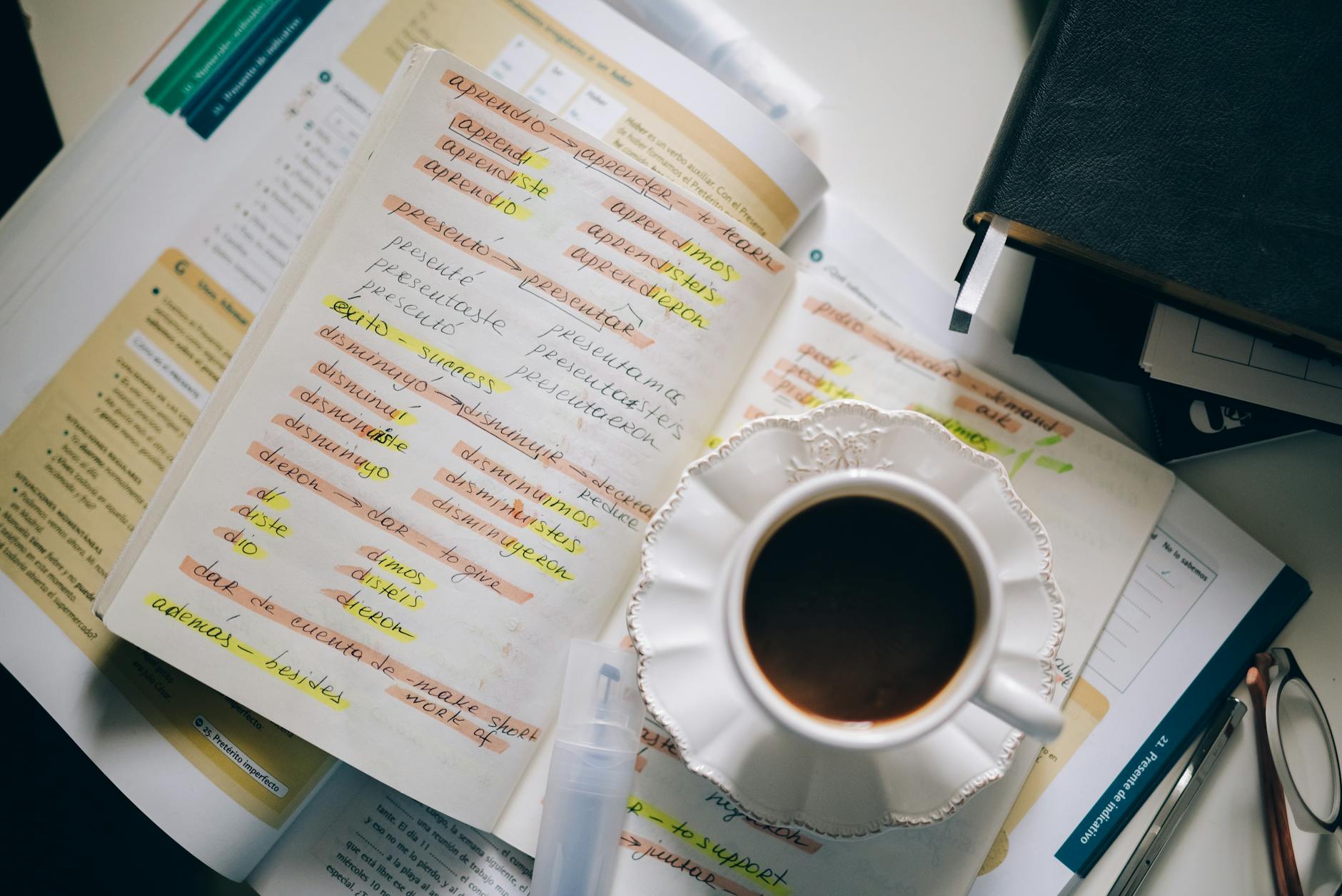
Using these subconscious signals will transform your social presence. If you’re learning spanish and introducing yourself , you could use this tricks to sound more confident. When you open your posture , hold sustained , delibrate eye contact and keep open palms you can signal confidence to others and feel more confident yourself. Stop waiting to feel confident , just makes these switches , be more prepared and do that thing you were avoiding!
Sources
Journal of Nonverbal Behaviour
Psychology Behind Open Posture
Open Body Posture vs. Inward Posture





Leave a Reply